Reversed Urbanism
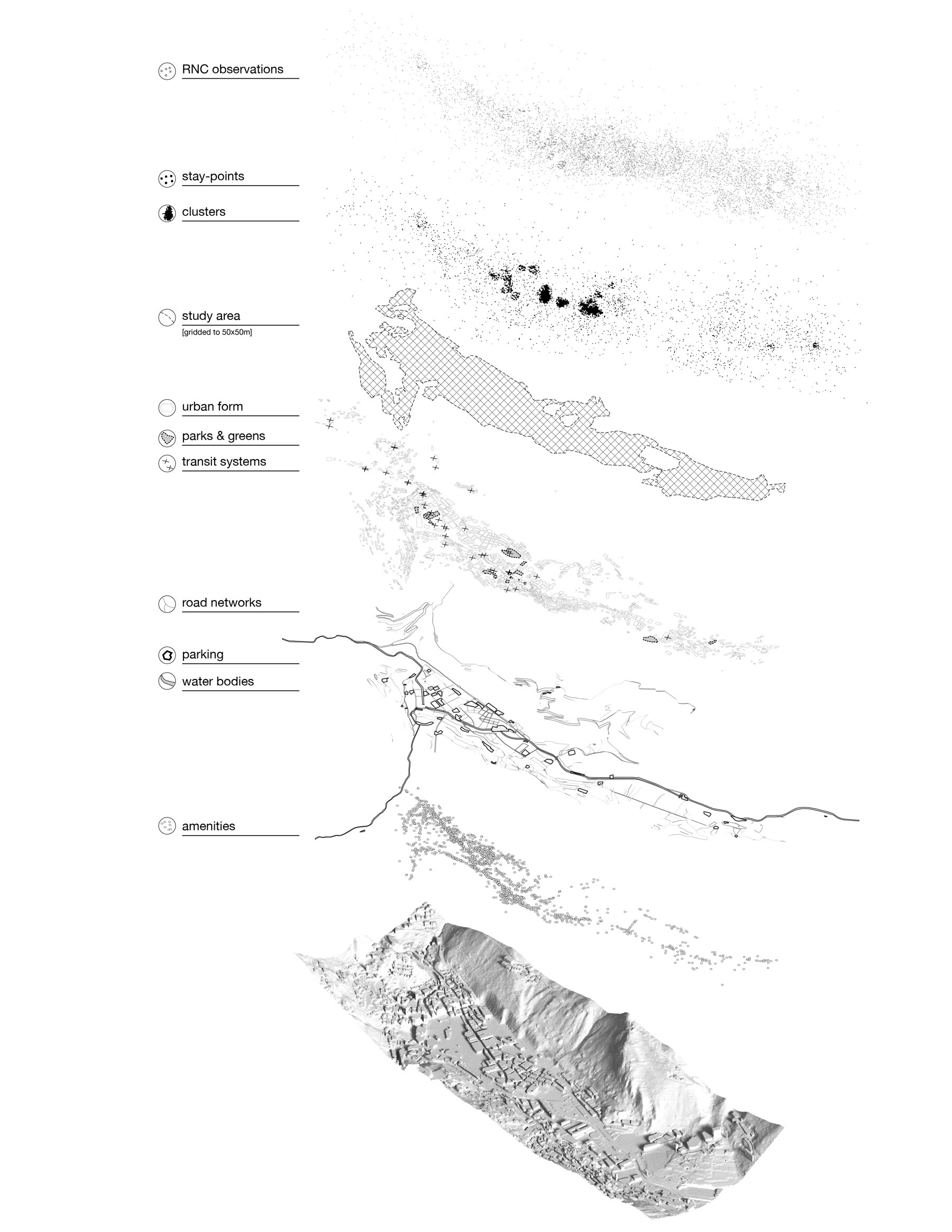
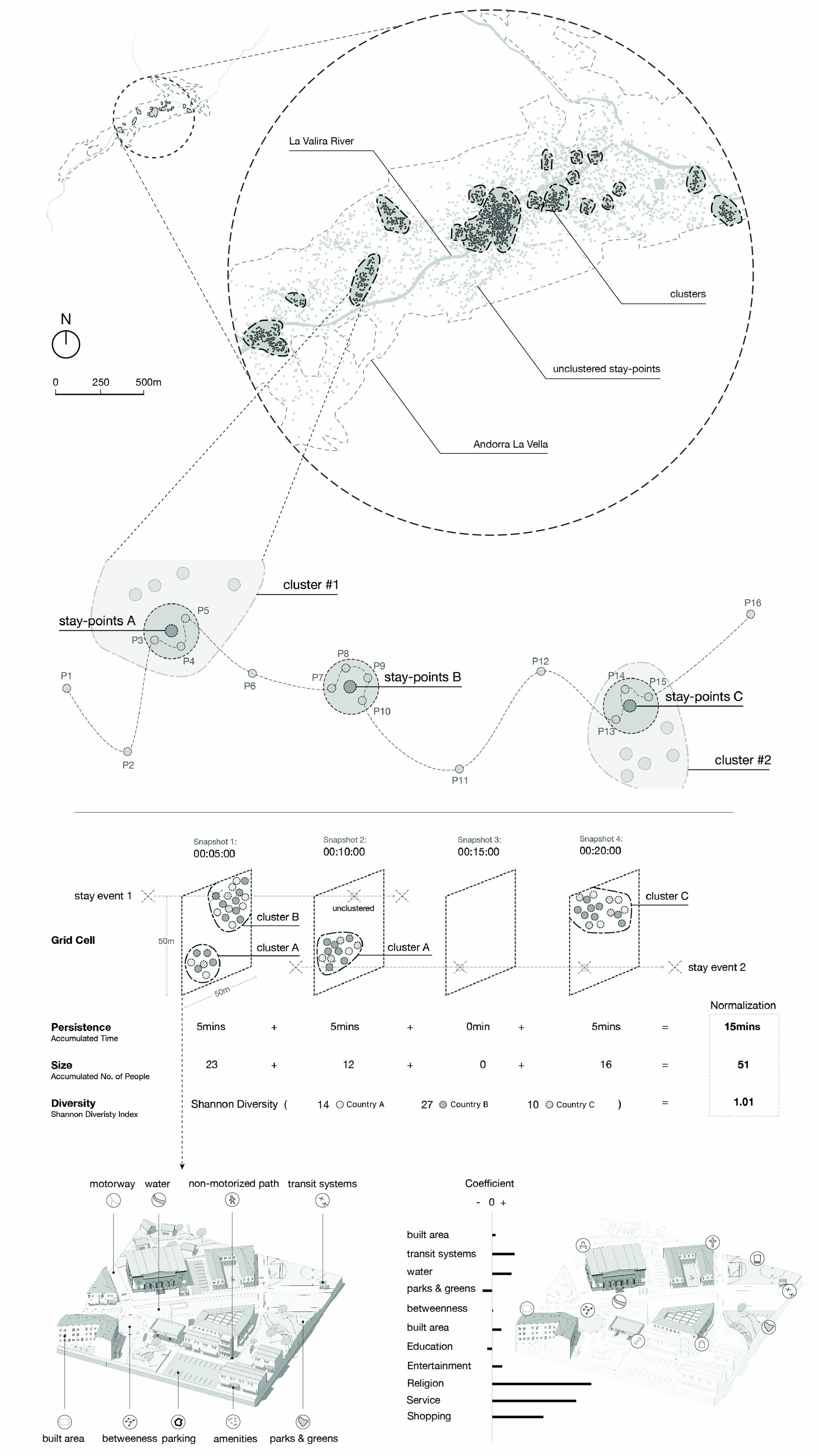
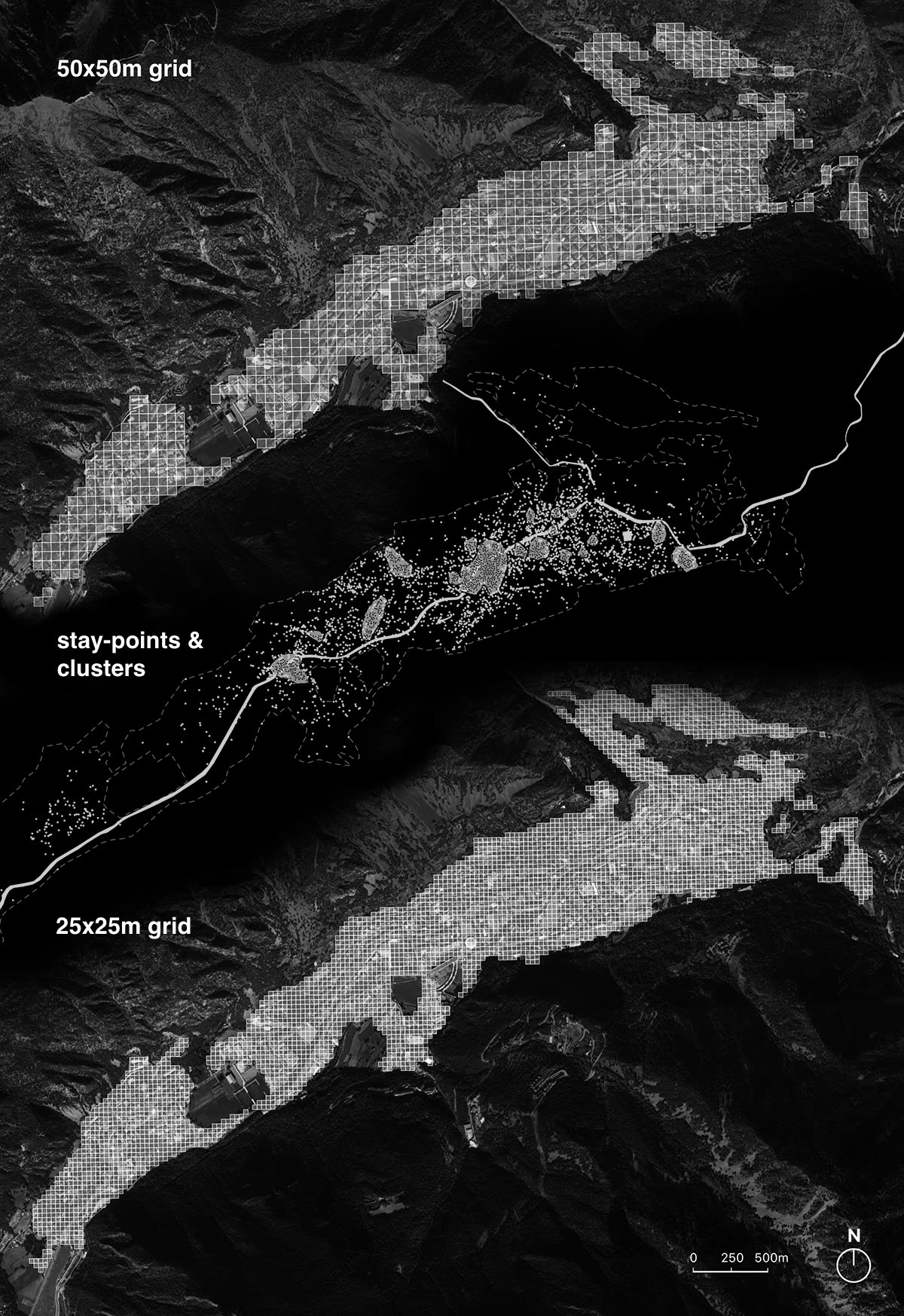
This study explores a method for analyzing diverse behavioral patterns in large urban populations and associating them with discrete urban features. The goal is to identify correlations between human dynamics and the characteristics of urban places. It asks which city forms have greater potential to attract large, heterogeneous, and diverse crowds; what amenities, services, and urban features produce highly active urban places; and what factors contribute to people staying at specific street corners for extended periods of time.
Urban environments are inherently temporal, combining static artifacts with dynamic activities. Historically, empirical analysis of user engagement with urban environments has been challenging due to limited data and tools. Advances in data and machine learning offer the potential to reverse the traditional approach of inferring behavior from urban form, instead suggesting urban form based on behavior.